
One Team. One Purpose.
Dr Rahul Kumar & Team
Dr Rahul Kumar is the CEO and Chief Interventional Neurologist at G S Neuroscience, Patna, a dedicated neuroscience hospital and research centre providing comprehensive neurological, neurosurgical, neurointerventional, neuroimaging and rehabilitation services.
Trained in the Zurich school of neurovascular anatomy and intervention, with the philosophy and teachings of Prof. Anton Valavanis and Prof. Luc Picard forming an important part of his academic development, Dr Kumar returned to India in 2012.
In 2014, G S Neuroscience established the first dedicated neurointerventional programme in the vast geographical region between Lucknow and Kolkata, bringing advanced endovascular treatment of neurological disease to Bihar and the surrounding region for the first time.
Since then, the centre has been associated with virtually every major “first” in neurointervention in Bihar, pioneering procedures that previously required patients to travel to established centres outside the state.
Today, G S Neuroscience functions through a multidisciplinary team comprising interventional neurology, neurology, neurosurgery, neuroanaesthesia, psychiatry, neuropsychology, neuroimaging and rehabilitation, supported by a dedicated cath-lab, critical-care and technical team.

Our philosophy remains simple: high-end neurovascular care should be combined with rigorous anatomical understanding, advanced imaging and continuous academic enquiry.
Key Achievements & Milestones
The establishment of the neurointerventional programme in 2014 represented an important milestone for neurological care in eastern India. At the time, there was no established neurointerventional programme between Lucknow and Kolkata, leaving a very large population without local access to contemporary endovascular neurological treatment.
G S Neuroscience subsequently pioneered neurointervention in Bihar and has all the major procedural firsts in the state to its credit, as the programme expanded from aneurysm and AVM embolization to acute stroke intervention and increasingly complex cerebrovascular procedures.
Clinical, Technological & Academic Growth
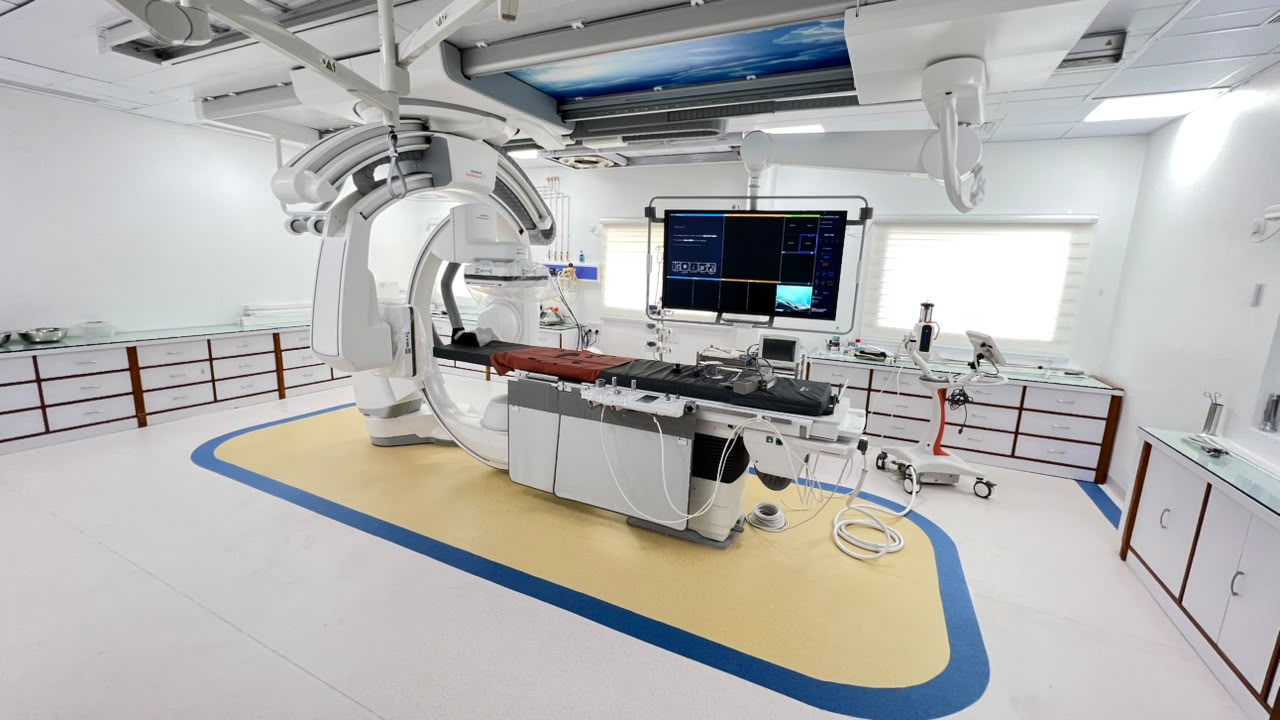
Its technological development has paralleled its clinical growth—from a GE IGS 530 monoplane angiography system in 2013 to the installation of the Siemens ARTIS icono biplane system in 2021, followed by expansion of advanced neuroimaging with 3T MRI and high-end CT.
The centre routinely undertakes complex neurovascular interventions including acute stroke thrombectomy, intracranial and extracranial stenting, aneurysm treatment, brain and spinal AVM embolization, dural AV fistula treatment, tumour embolization and complex cerebrovascular reconstruction.
Alongside its clinical programme, G S Neuroscience has maintained a strong academic identity. The Patna Course on Neurointervention, initiated in 2018, has evolved into PATNA EVOLVE—an intensive educational programme centred on neurovascular anatomy, embryology, phylogeny, advanced imaging and case-based learning.
The centre also maintains an active research programme with particular emphasis on cone-beam CT angiography and three-dimensional neurovascular anatomy, including ongoing work on brain AVM nidal architecture, meningioma embolization, spinal vascular anatomy, dural fistulas, chronic subdural hematoma and developmental cerebrovascular anatomy.
Unique Strengths & Expertise
What distinguishes G S Neuroscience is the integration of advanced angiography, high-resolution cone-beam CT, cross-sectional imaging and neurovascular anatomy directly into clinical decision-making.
The centre has developed particular expertise in 3D rotational angiography and selective/pedicle-specific CBCT, using these techniques to explore vascular anatomy and angioarchitecture that may remain concealed on conventional two-dimensional angiography.
Specialised Neurovascular Expertise
Our approach to neurointervention is based not simply on treating an angiographic abnormality, but on understanding why the vascular anatomy looks the way it does, how it developed, and how that anatomy should determine the safest route to treatment.
From establishing the region’s first neurointerventional programme in 2014 to developing an advanced imaging- and anatomy-driven neurovascular practice today, the objective has remained unchanged: to bring contemporary neurointervention to patients locally while contributing academically to the evolution of the specialty.
For NICE LIVE 2026, G S Neuroscience is privileged to transmit a live neurointerventional case from Patna and share this approach with colleagues across India and beyond.
Patna, Bihar, India
G S Neuroscience